What Will Be in the Slideshow at Your Funeral? | Richard G. Riccardi

 Apple Podcasts
 Spotify
 YouTube
 RSS Feed
 Castro
 What will be in the slideshow at your funeral?
Richard G. Riccardi joins me for a conversation about fatherhood, faith, family, work, and what remains when the career eventually ends.
Richard spent years building businesses and chasing professional goals. Now, as a grandfather looking back, he offers a perspective every father in the thick of raising kids and building a career needs to hear.
We talk about:
• Why financial provision can’t replace your presence
• The years fathers can easily lose while building a career
• Letting your kids fail and learn safely
• Showing your children that Dad can be wrong
• Making decisions without having perfect information
• Why I prefer harmony over “work-life balance”
• Generational wealth, saving, and family legacy
• Faith and finding real community with other men
• Starting small instead of waiting for the perfect time
• Why fathers need to shut out the noise and trust themselves
One of Richard’s questions stayed with me after we finished recording:
What will be in the slideshow at your funeral?
Because eventually the titles, accomplishments, and work go away. The people you loved and the life you shared with them remain.
Connect with Richard G. Riccardi:
https://richardgriccardi.com/
Richard is the author of The Wandering Worshipper, available through his website and major book retailers.
MORE FROM 4 FIT FATHERHOOD
Resources & Coaching:
https://stan.store/4fitfatherhood
Baseline Performance:
http://www.baselineperformancenow.com/
Save on ZZZ Tape:
https://zzztape.com/discount/4fitfatherhood?ref=qmhrgitu
Richard shares personal observations about estate planning and money based on his experience. This episode is educational and does not provide individualized legal or financial advice.
#Fatherhood #PresentFather #4FitFatherhood
00:00 Intro
00:41 Open heart, open mind in fatherhood
02:59 Why kids need to fail sometimes
04:00 Letting your children see Dad be wrong
06:08 Making decisions without certainty
09:07 What happens when your career ends
12:20 Provision vs. presence
16:21 You’ll never regret time with your family
18:09 Stop chasing perfect balance
21:48 Generational wealth and family legacy
28:42 Faith, church, and starting where you are
31:34 Stop waiting for the perfect time
37:32 Why men need faith and community
39:03 You have to be present to win
45:24 Shut out the noise and trust yourself
49:21 How to connect with Richard
Follow on Instagram
👉🏿 @4fitfatherhood
Richard G. Riccardi: I'm living a life, I'm thinking about the slideshow at my funeral. And what pictures are gonna be there? And as I think about it, I'll relate it to how my church how I had to approach my church journey, and that is with an open heart and open mind. So I had to go in these places that I was different, they and they were different from me, and it was a different religion. And I just had to be receptive to what I might see, hear, and find. And so I think when we talk about bringing that into our families, I think that's kind of a similar perspective we need to have as fathers. Many times, and I know myself included, that I had very rigid ideas about the way things should be. After all, I was the man of the house and on the father and their kids and they're supposed to obey. And too often I didn't have an open heart. Well, hopefully I was always open hearted, but I did certainly didn't have an open mind. And it all goes back to this concept of we always talk about of listening. How well did we listen do we listen to our children? And I know there were many times I did not listen sufficiently or did not have s a sufficient open mind. So I think if you want to bring a sense of belonging into the family and community into the family, that you need to bring a great level of receptivity. Now, of course, you have to stick to your value system and your morals. Just because you want to you're you're okay with listening to someone or hearing someone out doesn't mean you're going to agree with them and adopt what they what they have. But I find that we need to have a receptivity. So the open heart, open mind towards our own families is a way we
Rod Richard: Yeah.
Richard G. Riccardi: can bring community back into our own families.
Rod Richard: when your mind is open, your heart is open, it it allows them to enter kind of enter freely, right? Like your family kinda gets to be in that space without the barriers, maybe, or or you know, set parameters 'cause dad's only gonna love me or anyone gonna care about me in if I'm this way only, right? whereas
Richard G. Riccardi: That's various too. That's a great observation is that we put that on our we unintentionally put that on our children, or maybe sometimes intentionally I did, but that, you know, hey, this is the standard and I know it. I know what it should be. And we don't allow our children some freedom that they you know, they they they they need in order to develop and maybe to understand. You know, sometimes you've got to touch the hot plate and
Rod Richard: Yeah.
Richard G. Riccardi: learn your lesson.
Rod Richard: Yeah. I and you know it's funny, I I say that all the time 'cause we're w my wife and I I have a a thirteen year old and eleven year old and sometimes I'm like it sometimes we just gotta let f fall on their face. Like we gotta let fail. 'Cause I don't know how many times you have to be told that the the the the fire is hot, but however many times, none of them compare to touching the fire. Right? 'Cause as soon
Richard G. Riccardi: Yeah.
Rod Richard: as you as soon as you touch it, you know immediately that it's not to be touched. But someone can tell you a hundred times And you'll keep playing with the fire until you actually get burned and then you finally understand it. So I'm like sometimes we just gotta let them fail. you know, safely obviously. Like we don't want them to to fail in a way that's gonna harm them indefinitely, but but we do want them to learn and I think sometimes that closes the gap. Sometimes there's an event that happens or or a loss or a failure that they come across that that closes the gap of of understanding. that faster than we can by giving them our knowledge, right?
Richard G. Riccardi: I think that's absolutely correct. And I'll let's take it a a step further, is that we're also dads and our word is law, and we want to convey to our children that we are perfect and we do no wrong. And the reality is we need to be open-minded and open-hearted enough to tell them also, look, hey, there's times we've been wrong in our lives. So we know we've learned some of these lessons because we have been wrong. And it's okay to be wrong. Not only it's okay, it's apparently okay because it's gonna happen. You're
Rod Richard: Mm-hmm.
Richard G. Riccardi: gonna be wrong sometimes. And that includes when you're a child, and it includes when you're a parent, and includes when you're a grandparent, that sometimes you're going to be wrong. and we need to let our kids know that, yeah, hey, sometimes we ha you know, we are wrong without undermining our authority. You know, just giving them out well, you could be wrong on this, dad. And so, well, yeah, I could be wrong, but this is this is also the authority I have.
Rod Richard: Right. Yeah. Yeah. Even even saying that, you know, I could be wrong, gives gives a little bit of it's possible, right? raising raising a child or or raising a a son to you know become a man, that almost human answer is like, yeah, I could be wrong, right? But this Based on the set of know the skills that I have, the knowledge that I have, this is the way we're gonna do things. And I could be wrong. And that's okay, right? Because if I am wrong, then I learned through my error what is the right way to do it. And showing kids that, or at least allowing them to understand that that is a real way to go about things makes makes it not so difficult to navigate life. I'm seeing this with my oldest daughter, she's not a perfectionist. But she is a little bit, right? Like she wants to do everything right. She understands that, you know, there's some times where she's not going to be right, but she, man, she hates it. Like if she
Richard G. Riccardi: Yeah.
Rod Richard: gets something wrong or if she does it, man, it's like the worst thing in the world. So like I'm trying to help her understand, like, yes, this is sometimes you're gonna do everything right and it's still not gonna go your way. And that's okay.
Richard G. Riccardi: Right. The results. You can only control your in so that's another lesson. You can only control your inputs and you're not going to be able to control the outputs always. But I think the other thing you teach when you when you did this, when I was I was listening to you, I think one of the things you other you otherwise taught is the need to make a decision and the importance of making a decision. So the
Rod Richard: Mm-hmm.
Richard G. Riccardi: fact that I might be wrong and the fact that I don't have perfect judgment or wisdom won't stop me from making a decision. Because at some point, a decision is required. And so I'm gonna to make a decision with the knowledge that it may be wrong. But the ev what would be even worse is not to make a decision and flounder indefinitely. So that's another point you just made in that discussion.
Rod Richard: Yeah, I think that's important. I think that's really important. I and I wasn't even leaning into that, but I'm glad you picked that up. Is that I think it's really important because you have to make a decision with some level of conviction and you have to follow through with it and then deal with the repercussions. Maybe it maybe it works. Maybe you were right and now you got whatever positive outcome that you wanted and maybe you were wrong and now like now, now we do the work. Right. Now we figure out how we navigate whatever results came out of it that maybe we didn't want. How do we adjust the next time we need to make this decision? I think those are very valuable lessons that we have to actively teach our children. Right. I think and and this is why I said like I had two dads and and but I felt like I learned from observing, right? Like you say you're a curious observer. I've never given it a title, but I'd definitely love to watch, right? And I definitely pay attention. And I learned things through seeing them. But I wasn't exactly told how to do things, right? And that that's just not their style. Even now, right? Even now. They they just aren't gonna share a whole lot of information. And so I'm just learning through observation. But with my daughters, I know that sometimes they're gonna be learning through observation. But whenever I'm aware of it, I wanna also tell them this is what's happening, right? Kind of give them an idea of my thought process, how I how I process the situation to get to where we are. because I I know That for them, hopefully, allows them the same processes to make those decisions when it's their turn.
Richard G. Riccardi: Right. No, it's that mixture of guidance, example and guidance. And in faith, you know, I think it was Fran San Fre Saint Francis who said this, but I may be misattributing, is that you know, preach the gospel constantly, use words only when necessary.
Rod Richard: I like that.
Richard G. Riccardi: And so and there's a little but now obviously our children need more a little bit more instruction. They need a little more classroom instruction. But but what we can't do, and I think that's this is what you're saying for sure, or you would say this, is that we can't say one thing and do another.
Rod Richard: Right.
Richard G. Riccardi: That's fatal. You know, you absolutely cannot say one thing and do another. you know, with your children. And then I'll wait, I'm gonna jump in here with an old man's perspective. Now that
Rod Richard: Yeah.
Richard G. Riccardi: I'm a grandfather and And and I would say I'm mostly retired, but a lot of my friends are retired. And we spend there's seasons in life, and in our younger seasons, we spend a lot of time on our professional endeavor. We're very dedicated to our careers, very dedicated to our our jobs, and you can't do everything. And so sometimes yes, there's a sacrifice to your family. And it's unavoidable. You want to think about that though, and you want to minimize it. You wanna compensate for it the best you can. But one thing I would plant a seed in a younger person's mind is that at the end of the day, and comes very soon after you quit working, all that professional stuff goes away. I mean, my life was making frozen entrees. I thought there was nothing else to my life besides making front frozen entrees. Ten years later, I almost have forgotten about frozen entrees. I rarely even mention frozen entrees anymore. And
Rod Richard: Yeah.
Richard G. Riccardi: it captivated my life. I mean, we had a big business, 150 employees, had two facilities. I mean, it was on my mind constantly. I've had two friends who just recently retired. Both they were CEOs. They built publicly traded companies. They were both CEOs of their publicly traded companies. Boom, they retire. And it's surprising in how short order that is behind them. They don't talk about it anymore. And yes, they were the CEO of this and they were the CEO of that. And I can give you the ticker symbol. And, you know, that's that's gone. Actually, I've got three friends. Now I just thought of another one as we were as we were talking. And yeah, that was all great. And yeah, we did and I did that and we did that and what have you, but we don't talk about that anymore. I I and I was not a CEO of a publicly traded company, but you know, you don't hear me talk about frozen entrees a So what you you find, so that's why I want to plant the seed is that when you're in your 40s, it's all encompassing your career and you think that's all there ever will be. And then not only will there be another day, hopefully, Lord willing, but when that day comes, it's going to fade very quickly. All those accomplishments, all those achievements, ringing the bell at n in the New York Stock Exchange, all gonna fade so fast. It's not even, it's not even gonna be funny. Then what becomes important is what you see behind me. You see all these, you don't see any rewards up there. You see, you don't see any my bank statements up there. What you do is you see pictures of treasured family and friends. And so now what I say is, and I don't want to get, and this is not far from fatherhood, is that I'm living a life, I'm thinking about the slideshow at my funeral. And what pictures are gonna be there? And there won't be any frozen entrees, there
Rod Richard: Mm-hmm.
Richard G. Riccardi: won't be any legal gavels, there won't be any CPA s you know, green eye shade, there won't be any of that. It's gonna be pictures of things I did with my family and friends.
Rod Richard: Yeah, that that's powerful. And that's really important to hear, especially the guys that are like in the in the thick of it. Right? Like if you're younger children, when we first start having kids, we're kind of in that that stage of our life where we're trying to build, right? We're trying to build our business or we're trying to build our company or we're just trying to work up the ladder or whatever. And so we put a lot of attention and focus on that. it's interesting that it always seems to happen right around the same time we have kids. I think that's just based on chronological order. and so we're like I hear guys say this all the time is you know, I'm gonna work hard now while they're young so that when they're older I have time to be with them. And it it it always sounds good, but it doesn't always work that way, right? Like 'cause you get into these modes and I did it myself. I felt the same way. I got into a mode where I was grinding and building a a b a business that wasn't even mine, but building a business and we got to a certain level and then, you know, without COVID, I probably would have never noticed that I wasn't around the way I wanted to be around. I just was I was just in a grind mode, just building, building, building, looking to the future, looking to this thing and that thing. And behind me, my family was growing up without me. and I think it's really important that you point out, like at the end of it all. We're not going to care about how many athletes I trained. We're not going to care about, you know, who the who's who of of people that I've worked with, the gyms that I've I've run. It's gonna be the the pictures of your family, the the the vacations or just the silly stuff, the birthdays, the like the little things that that are gonna be the real memories and the things that are actually most important. But we lose sight of that early, right? Like we miss the forest because of the trees kind of idea. Because we're so we're so caught up in I think what everybody tells us is the most important aspect of a father, which is which is provision. So I wanna ask you, what do you think a father owes his family beyond provision?
Richard G. Riccardi: Yeah. And now at the risk of s being a hypocrite, because I was in that stage where I was all in on my business and I didn't spend enough time. But I really I'm gonna give myself some grace. I think my kids will give me give me some grace also, is that we owe our kids a lot more than new Nikes and Apple iPads. And
Rod Richard: Mm-hmm.
Richard G. Riccardi: at the end of the day, you know, we look back on our We only have do look back on our own childhood. And you're gonna remember the days that you went fishing with your dad or played ball with your dad. And it's unlikely you're gonna remember that, you know, the day he gave you an iPad, if he gave you an iPad, or you know, whatever that prized little possession was. It'll be the time we spent. So I think first thing is we look back on the experiences that formed us and touched us, you know, think and go a step beyond your parents. What your grandparents, your grandparents probably You probably love your grandparents. They probably never gave you anything much of monetary value, but you remember time the grand you sat on your grandfather's knee and he told you stories or the sandwich your grandmother made you when you came inside from playing and she did it with such loving care. So if we think about that, then we think what kind of provision? Now look, I it's important, so you know, you you train people and you know there's a certain level of dedication you need. In order if you really want to progress. And so you just have to decide what level you're going to go and and maybe accept that you're not going to make it to the top because you're not going to put in the time to do it. And I'm not going to put in the time and effort to do it. And this, and I've really come to that stage in my life now, a little bit because of my age, is that. Yeah, there's things. Hey, I want I want the wandering worshipper to be a household name. Are you willing to work 60 hours a week doing it? No, I'm not. And so
Rod Richard: Yeah.
Richard G. Riccardi: I'm gonna have to settle for whatever that result may be, or settle with it, whatever results come with that amount of effort. And guess what? It's okay because I'm gonna go see Little Ricky in Chicago this weekend. And my grandson. And so that's, you know, that's what I want to do. And I'm going to take time off to do that. And I love to travel. I'm going to take time off to do that. What's important. But I think you'll never regret spending time with your family. You'll never look back at and say, I spent too much time with my father with my family. I would have been more successful at work. You ever hear anyone say that on their deathbed?
Rod Richard: No.
Richard G. Riccardi: God, if I had not spent all that time coaching my kids, little league, I would have made a lot more money. I never hear
Rod Richard: Yeah, no.
Richard G. Riccardi: that. And it's hard when you're in the thick of it. I write this in my blog, in one of my blogs, the most I say is maybe I'm just planting a little bit of a seed in someone in their 40s who's really hitting it very hard. And say, you know, I know there's a day this won't be as important. And how will that impact what I do today? so maybe I will have I have more time to enjoy my children and grandchildren now. But hopefully I planted the seeds when they were younger that they would wanna have that relationship with me today. And so, and fortunately I have. and so that's really what you know the best the maybe the best you can do when you're hitting it hard in your forties. And you got
Rod Richard: Yeah. Yeah.
Richard G. Riccardi: that mortgage and you got that car payment and you know, and the kids need new shoes, the feet keep growing. and all and so I I appreciate that and I understand that, but I think we gotta just again, at the end of the day, this will be what's most important.
Rod Richard: Yeah. Yeah, and I think it's it's kind of a balancing act to some degree, right? Like there's maybe maybe even talk about like scales, right? Like it's you're trying to kind of find that perfect balance. And I don't think you really do. It's kind of like, you know, some things sometimes it's it's a little bit up, sometimes a little bit down, you said settled. I I I think sometimes the words mess us up. Right. Like when we say, had to settle for this, I had to settle for that. People sometimes look at that negatively. Right. Like you you didn't get the result you wanted, but you settled for this, right? I think maybe you're looking at it as I'm satisfied here, right? Like, yeah, I sure, sure, I could build a business that is is, you know, ends up begin becoming a publicly traded company. But it at in order to do that, I would have to spend, like you said, maybe sixty it's gonna be probably more than that. But let's say sixty hours a week. Building this business, which means I don't have time for the family that I'm building also at the same time. So then maybe I don't do that, right? Maybe I'm satisfied with just a really good company and and that that that is beloved in my neighborhood. Right? Like we service we service the needs of the people in the community. My my mortgage is paid, you know, the bills are are paid. We're not living check to check. My my kids are taken care of, and I get to coach the team. Matter of fact, my my business sponsors the Little League team, so my kids gets a a hoodie with my you know, with my company name on the back of it. Like and that's that's beautiful. That's happy. I don't need my company to be the biggest whatever in the
Richard G. Riccardi: Now let me tell you, and these men that my friends and you know, I would certainly say they are good fathers and they have good relationships with their kids. we all know that people can have terrible relationships with their kids and fortunately
Rod Richard: Right.
Richard G. Riccardi: they don't fall into that category. But it's a much more difficult balancing act. you know what when you talk about the scales of justice and the the the balance scales of balance. I come up I've come up with another metaphor for that. You know the lava lamps and those bubbles that go bigger and smaller. So that's what happens in life. Hey, sometimes there's gonna the the equipment's gonna break down at the plant, and you gotta be there. And that lava lamp bubble of the business is bigger. But then you have to make sure it goes down to the right size. so it's not always gonna be like this. You're right, you say sometimes they shift around. So I go, it's like the bubbles in a lava lamp. And that's how your priorities
Rod Richard: Like that.
Richard G. Riccardi: just morph around. Look, you're gonna get the call, your mom's in the hospital, you're gonna drop everything and go there. even even when
Rod Richard: Yeah. Yeah, I like that.
Richard G. Riccardi: even if you're very busy at work.
Rod Richard: I like that visual too, 'cause it's kind of always moving, right? It's it's kind of constantly flowing. It's not one of those situations. I think sometimes we think, I'm gonna get the business to this point and then, right? it's always moving. It's a constantly moving target and life is happening while you're trying to hit that target. It's like pulling the arrow back and like you've got water splashing your face and the wind is blowing and you're trying to hit a target and it it just it's probably better to look at it as everything is happening all at once. And it's not a maybe about balancing and it's more about harmony, right? And kind of finding where everything fits into place.
Richard G. Riccardi: Right. Good word.
Rod Richard: every part is important, right? Like if we talk like a barbershop quartet, right? They they sing in harmony. the guy with the bass, like he he may not be your lead singer, but he's extremely important and he follow you know, he's keeping the bass line and And the guy who is maybe the lead, he has a point where he steps in and he goes for a solo, but all of it fits into the the whole piece of the quartet, right? Like there's no one part of the quartet that's more important than the other. They all work together in harmony. And I think that's kind of how we have to start looking at it is it's not work or versus life. It's just life. Like it's all just life.
Richard G. Riccardi: Exactly. Exactly. I think I I you hit it the nail right on the head. It's life. They're all going to be there and they're all going to be working at all different points together. you know, one of the things about we're taught about our businesses value creation is to make a lot of money. So there's this great term well, I I say great in parentheses, or quotation marks, generational wealth. And everyone wants to create generational wealth. Well, first of all, that's really lovely. Maybe about, and I was an estate planning attorney member, maybe about 1% of the people, not even 1% of the people really create general generational wealth. Most people, when they die, they get their parents' bills or they get the junk in the garage, and that's a and that's about it. I'd I would contend that there's nothing wrong with getting it, but putting that as a goal. First of all, I don't think we owe our children generational wealth. We don't owe them a a life of riches, number one. number two, some people would say a demonstration of a little bit of a lack of faith that, hey, there's gonna be provision for everybody, and you're not you don't have to be the generational provision of that. Thirdly, I've seen a lot of generational wealth do a lot of harm to people and to kids. And Yeah, I got some dear friends who that's been a major stumbling block for their children because of this generational wealth. So I don't think that's I would disavow people of that notion. But now here's one thing I gotta do, and I I think it was Jared when he was on your podcast, talked about this, is the importance of a will. And it's just funny, since I'm a former estate planning, when people die, someone calls me up and says, you know, we need some help with the estate. Well, do they have a will? No. And it's like, my gosh, this simple little document would save an enormous amount of time and hassle if they just had it. So I would just encourage your fathers, do get a simple, basic will. It will save you so much time. You can have elaborate state estate plans. I'm not giving any legal advice here. This is just a man about town with my experience. the living, the living trust, I'm not that big of a fan. fan of it. The real big problem is dying without a will. And you can't I can't say how many people who have children from previous marriages, multiple marriages, and children from previous marriages don't have a will. And then the state decides what your will says. And it's always unsatisfactory. If I had one little encouragement. And then the second thing is generational wealth and people, you know, I gotta get a side hustle and I gotta do this, that, and the other thing. And, you know, look on Instagram and it'll tell you how to invest your money. Probably the most important concept is start saving. And then the most important principle is compounding. Let time work for you. And that's the most the great Warren Buffett will tell you, the greatest investor of all time, will tell you that it's compounding. and you'd be surprised what the market will do for you. I think that's another thing. We just it's things worse today because of social media, of the notions that people are given, and it's so much just the basics that if they would pursue that, they'd be in such great Financial shape. If I if you summed up all the personal financial advice, I'd ask you one question. Are you saving at less at least 10% of your income? Why that question? Well, if you are, that tells me you're living within your means. If you are, it tells me you don't have any credit card debt. If you are, it tells me you have either you have it or the ability to have an emergency fund. If you're doing it, it tells me you have. Well, you have the ability to fully fund your retirement accounts. So that one question will answer as all the others. that's the question I would have every father ask themselves. Because again, we get so elaborate in terms of, my gosh, personal finance is so elaborate and how do we do how do we do that? No, do that one thing and everything else will fall you know, into place. Again, I'm not a financial planner, not offering financial
Rod Richard: Isn't
Richard G. Riccardi: advice.
Rod Richard: good. Wait a throw that throw that here.
Richard G. Riccardi: Just got just a man about town and ordering and just offering some guidance because we get so someone asked me, Richard, you know, you might be helpful at the church to teach a class on evaluating alternative investments. I said, you know, I have some knowledge there. But ninety-eight percent of the people in our church aren't prepared to invest in alternative investments and they shouldn't even consider it. They gotta get their house in order.
Rod Richard: Yeah.
Richard G. Riccardi: And and so w that's the problem. We start, we watch on Instagram, invest in this, and it you know, it blew up and now I'm a I'm a bazillionaire. But for ninety eight percent of the people, that's just not relevant.
Rod Richard: Yeah. I think those are two very simple things that that most of us miss because there's a lot of noise out there. But having a will at the very least, because when you pass, there's already gonna be enough stuff going on for whoever's remaining. If you can just Cut the the the state out of it and have things be trans just d this person gets this, this person gets that and you know that that makes life a lot easier for a grieving family. and then yes, sure, you could do all these different things in the stock market and make all these investments and have side hustles and those are all great when you have the bandwidth to do it or the resources to do it. But if you're just starting out, the bare minimum like let's just get this in order, right? a solid foundation of these things first before you get into all the the bells and whistles and the fancy stuff and you know that might be for you at some point right you may build a a a life that supports that and you can go and it and diversify your portfolio and have all these things but it's hard to start there
Richard G. Riccardi: Yeah. No, and look, hey, I certainly have private equ what we call private inve equity investments, alternative investments. But when Warren Buffett says, Hey, my wife, when I die, she's gonna have ninety percent of her money in the S P five hundred index fund and ten percent in a corporate bond fund. And that's it. You know, I I kinda listen to him. And you find,
Rod Richard: Yeah.
Richard G. Riccardi: yeah, most of my investments are in, you know, well diversified portfolio of index funds, entirely unsexy. I can't post that on Instagram.
Rod Richard: Yeah, yeah.
Richard G. Riccardi: I'm not gonna get famous for that, but I'm gonna be just fine.
Rod Richard: Yeah. So I
Richard G. Riccardi: But
Rod Richard: go ahead.
Richard G. Riccardi: no, no, and so I I I don't mean to digress too much and you know, I know we have have we talked enough about the pillar of faith and if I could just add you know one thing is that many sometimes men have bad experiences carrying some baggage or out of the church and they have this elaborate notion to what faith is. So I'm gonna just say what I tell you my notion of faith is from just a layman, is I say It is accepting God's love. And when you do that, it transforms you into a lover of all. So accept his love, then you'll be loving. And you know what? I think he sa Jesus sums it up into two commandments. And so I think you got two of those commandments right there. Pretty much some sums it up. And then the second thing is, gee, I can't go to church because I don't know that much. I'm actually carrying some sin. And so I don't want to go to church. And I'm afraid of what I might find, find there. And what I've heard is not good things. So what I would say. Number one, you don't wash before you take a shower. You don't need to be good to go to church. You don't need to know anything to go to church. You can show up. The doors are always open, and there's gonna be people smiling at the front with coffee and donuts. So you can always show up. for those who have been wounded, yes, you have to resolve that. But I would start with saying that there's a virtue in the church community, a huge virtue. And so you may have to. Work on that wounding and healing. I mean, look, people have been sexually abused in church. They've stolen money in churches. There's some big wounds. And so, but just I'll liken it to you, might have had a partner, romantic partner that cheated on you. That makes it very hard for you to trust anyone and get into another relationship. But you acknowledge that, hey, you know what, getting into a loving relationship is really good. So I'm gonna work on this wounding so I can make myself receptive. So I'd say that's the same thing I'd recommend with respect to the church relationship for those who have been wounded. Look, and you can show up to church and say, Look, I'm not ready to love God. Well, you don't need to be ready to love God. In fact, you can go for the wrong reason. Do you ever think alcoholics ever show up to that first meeting saying, This is not for me? I don't belong here. I'm not an alcoholic. I don't need this. Well, of Friends of mine in the 12 step program says, well, that's about ninety-nine percent of the people, guys, who show up at the first meeting. And so you can even be oppositional,
Rod Richard: Right.
Richard G. Riccardi: show up oppositional. And then what I say, if the communities are what we say they are and what they should be and what they aspire to be, then they will take you along exactly where you need to be along your spiritual and faith journey.
Rod Richard: Yeah. I you know what, there's a couple of things that you hit like that are that are really important to point out and I think this happens a lot of times in in the fitness realm is people feel like they have to be ready to start. You know? Like
Richard G. Riccardi: Yeah, yeah.
Rod Richard: and that's why it's always like I'll wait till Monday or I'm gonna start next week or I'm gonna start next month 'cause it's always like that, I gotta bit I gotta be ready to start. and I think that barrier and it's kind of imposter syndrome, right? It's like I'm not the person that I need to be in order to start this journey. But that thought in itself kind of proves that you already are. Because you already know you're not where you wanna be, and that should be enough to know you need to start. But it it for whatever reason it hamstrings us, right? It holds us up. But I think if you're if you're a guy who's listening to this and you heard that, right, that and and you felt that before, that was your sign. You know, it it doesn't
Richard G. Riccardi: Yeah.
Rod Richard: have to be a perfect day. It doesn't have to be, you know, the sun's the sun is shining, the dogs are barking, the birds are chirping, it's the perfect Sunday to walk in, or it's the perfect day to start this new habit. It doesn't have to be that. Matter of fact, it it's probably better to start it on the worst day. Because because then you have
Richard G. Riccardi: Yeah.
Rod Richard: the opportunity for every other day to be better than that day, right? Like you there there the the the the trajectory is up from there, right? and so again if if guys who are listening and and heard that and are trying to find their their their place to belong or feeling disconnected from family or faith or community or even from yourself. There isn't a perfect day or perfect way to start. There is just starting.
Richard G. Riccardi: you're so right. We burden ourselves with this with a size of start that's unwarranted. I mean, just start, just show up. Hey, you only have to show up to church one time. I'll tell you a quick story about how I started flossing. Well, actually, I started flossing just by putting floss sticks by my toothpaste. That's all I did. And then finally, like Edgar Allan Poe's Telltale Heart, they called out to me. But then I said, you know what? I'm going to be oppositional. I'm not going to do too much. Two teeth on each row. Only two days a week. That's all I'm gonna do. Well, I just ch activated the law of inertia. Well, then you know what happened? I started adding some teeth, and then I started adding some days, and then you know, three months later, I'm a flosser.
Rod Richard: Yeah.
Richard G. Riccardi: And in fact, in my blog a couple of weeks ago, I put out a hundred thousand dollar challenge to my readers. I said, try to prove me wrong. I said, pick a start, no matter how small you want. And if you're consistent with that start, I guarantee you you're gonna make great progress. For instance, you won't be able to keep to two teeth two times a week. By the time six weeks rolls around, you're gonna be more teeth. If you do it every week, you will be more teeth. And more days by the time you hit six six weeks. Now, if I'm wrong, I'll give your favorite charity a thousand dollars. But I'm never I'm never gonna have to pay on that because everyone's gonna progress. Everyone's gonna do
Rod Richard: Right.
Richard G. Riccardi: more. And I even said, look, there's a consolation prize. If someone takes me up on it and they and they progress, I'm not gonna penalize their charity. I'll give money to their charity too. I mean, that would be
Rod Richard: That would
Richard G. Riccardi: but but I'm so confident I'm gonna win. I'm never gonna have to give any money because
Rod Richard: Yeah.
Richard G. Riccardi: I lost the challenge. So don't burden yourself, just like you said, with some enormous start. Do it. Go walk 20 minutes a week, two days a week. Twenty minutes a day, two days a week, rather. In six weeks, you're gonna be walking twenty-five minutes, a half hour, four days a week. You won't be able to help yourself. I mean, how many times have you seen that in your personal training world?
Rod Richard: Yeah, for sure. For sure. It's it's a snowball effect, right? It like it just continues to grow and grow. And I think, w even even as it's it's kind of habit formation, right? It's what kind of what you're talking about, you're kind of linking two things together to kind of build 'cause you're gonna brush your teeth every day, right? So putting the the flossers next to it is it's a signal that I'm brushing my teeth, I should floss. The thing that interesting about it is like you said, after a couple of weeks, you you would have to actively force yourself not to floss with them next to your you know what they're there for. You'd have to be like, Mm, no, it's not my day to floss. And you know, like you have to really try hard not to do it. So you're absolutely right. when you actually start And start small, right? Because if was a big thing, right? Like if you started, you're like every day I'm gonna floss every tooth for f five minutes. I'm gonna by day two, you you know, it it just for whatever reason, not any any doing of your own, it would just happen naturally that that's hard to keep up. But if you start small, it's easier to build on.
Richard G. Riccardi: Right. Do you tell all of your people on January first, well, let's work out thirty days in a row? You haven't been working
Rod Richard: Yeah.
Richard G. Riccardi: out, but January first, let's work out thirty days in a row.
Rod Richard: Uh-huh. Yeah. No, let
Richard G. Riccardi: No one does that. Or if they do it, then in February they work out zero.
Rod Richard: Yeah, exactly. Exactly. It it it's always it's always interesting to see how that kind of works, is like that happens with a lot of things and I obviously using fitness as the example, but it happens a a lot of things in life. Like as a day I'm just gonna start showing up, right? I'm gonna do all the things, I'm gonna be at everything, I'm gonna be at every game, it'll be at every recital. And yeah, that in theory it sounds good and you're gonna try your best to do it, but the first time you miss, you're gonna feel like the world ended. And then the next time you miss, you're like, well, I guess I can't do it all. And just and then it then just kinda naturally starts falling off. The same thing happens in fitness. It's like I'm gonna work out every day. And then you miss Saturday. And you feel terrible about yourself and you you feel embarrassed so you don't work out on Sunday. And now you got two days. And then before you know it,
Richard G. Riccardi: Yeah.
Rod Richard: something happens on Wednesday where you can't, it's not it's beyond your control, and now your whole thing is over. So you're like, well I didn't work out 30 days straight. I'll start next month.
Richard G. Riccardi: Yep. you definitely see that in the fitness world. But you're right, it extends to every habit we have as fathers. I should be talking more about faith because that's the faith the component where I'm at. And you know, I love what you said. It's thinking bigger than yourself. So having faith is thinking is a belief in something bigger than yourself. Don't overcomplicate it. Accept God's love. It will transform you into a lover of all. The place that can foster and nurture your faith development is a church. I assure you there's a place for everyone, and everyone needs a place. And Rod, you may have to go to a church with exclusively white members to find your place.
Rod Richard: Right.
Richard G. Riccardi: I I don't I don't think you my experience would tell you you don't. but It may be in some place that you don't even expect. And then that's the
Rod Richard: Yeah. Yeah.
Richard G. Riccardi: place where you can find some belonging. You can find other men that you can travel this world through through this world with, rather. And that common belief and value system is just so incredibly supportive. And it's supporting you in the way that you want to go, in the direction you want to travel. And so it's just a big encouragement for people. It's a church can be a beautiful place. Go seize the benefit of community worship.
Rod Richard: Yeah. I I I agree. I agree. I it's it's it's necessary to be surrounded too. I know the we're in twenty twenty six, you can watch a sermon on on the internet or YouTube or on Zoom. and there is some community with the chat, right? But it's not the same as walking through those doors and being surrounded by the energy that each person brings, by the energy that is in the room. and you can call it whatever you want. You can say it's the Holy Ghost. or you could just say it's the collective energy of the room, which is similar. But I won't get into the semantics of it, right? But I think it's necessary. It may not work all the time, right? Like we're in the season, like my daughters play softball, so they have tournaments every weekend. So every Sunday it's hard for us. But when we can, right, at least once a month, we are we are in the room where we need to. getting getting filled up and then outside of that we we touch bass and w and services when we can or we'll listen to it or we'll we'll watch it together. but being a part of the room, my daughter's a big Hamilton fan and one of the one of the songs there is in the room where it happens. sometimes you need to be in the room where it happens. because that is where it becomes infectious. You know and it it that's where you can kind of build habits and and be reaffirmed and have a handshake and have a conversation and share a share a thought have some wisdom imparted on you. I think that's really really important because as we talked about earlier most of us are traveling through life with one or none friends. and so having a space where we can find community and find belonging is extremely important.
Richard G. Riccardi: you're so right. And presence, you're you're correct. It's just like your kids. You can FaceTime your kids if you want and say, Hey, I saw my kids. I would FaceTime them. Or you could be in the room with them and hugging them. And so you're right, church occurs as much as when I walk in that door and I'm slapping the back and hugging the people and before and after church and the conversation about this guy's job or the conversation about something I'm struggling with with maybe with my kids that I have. And so church is not just when the preacher Is giving me the message or we're worshiping and singing the songs. There's so much more to it than that. So yeah, you got to be present. I say you have to be present to win. and now you find me as the wandering worshiper. It's not only the title of the book, it really is who I am. No matter where I am in the world, I'm at church. A couple of weeks ago, I was in Lima, Peru, the United Unity Church of Pr Lima, Peru. I was there. This weekend, I'll be at St. Teresa of Avala on on Armitage Avenue in Lincoln Park. going to visit my or or at every nation church. I'll be one of the two in Chicago. 'Cause I'll I'll
Rod Richard: That's awesome. That's awesome.
Richard G. Riccardi: I'm just I just like being with that community of believers.
Rod Richard: it's it's interesting how that works, right? 'Cause you're going to different churches and different places, but you're still being fed, you know? Like I think sometimes too we get we get into this where we we we we have our church home and then we feel like we're cheating on our church home if we go somewhere else, you know? but but at the end of the day we're we're we're serving the same God. We're serving the same purpose, we're serving the same we're nurturing the same same part of ourselves and and I think we owe it to ourselves, we owe it to our families that like like you said, when you're traveling, I still am making it a point to be involved, to be in community.
Richard G. Riccardi: Yeah. Many people say, travel, good. I don't have to go to church a Sunday. I can sleep in. Well, I mean, so what do you you know, it's an example of a faith practice. And then plus, when you're on vacation with your kids, how are you wonderfully modeling? And you say, Wait, hey, we're on vacation, I know, but we're gonna take some time out to go to church. and so Yeah, I did that as a kid. Now look, it's it's kind of funny. I am an exceptional person. I really am. And I'm gonna prove it to you, I'm exceptional. So that when the man goes to church in the house, it's like 93% that the family goes. It's only seven percent. Well, I happen to be in the seven percent.
Rod Richard: Yeah.
Richard G. Riccardi: I'm exceptional in all the wrong ways. but I don't make no mistake about it, you know, I still feel like I'm modeling behavior and and they notice. They notice that I go. And everybody notices that I go and everybody knows this is important to me and everybody's seen the impact it's had on me. And so they it's
Rod Richard: Yeah. And and and they're they're probably feeling the benefits of you being a better version of you. Whether they go or not, they're
Richard G. Riccardi: I I hope so, yes. Yeah.
Rod Richard: receiving you at a different level. You know, when you're able to go and nurture that part of you, you bring that home and share it with them. Either way, right? Whether you get to share it with them
Richard G. Riccardi: Yeah.
Rod Richard: in community together or you bring it home. it's funny. the other day for work we had we had like a potluck. Not a potluck. They ordered food. Some people brought stuff and it was like catered, but there's some people brought stuff and there's a lady at my job that makes really good care. carrot cake and my kids obviously weren't there but I was able to bring that carrot cake home and share it with them and it's kind of a similar idea is like they may not be
Richard G. Riccardi: Yeah.
Rod Richard: in in there with you but you're able to take some of that and bring it home to them.
Richard G. Riccardi: Yeah, I gotta thank you very much for reminding me of that. Because sometimes, you know, it is discouraging. Like, what am I doing wrong? And that I've not influenced them. I'm asking people all over the world that can hear this podcast to give church a try and wait, your own children, you know, aren't. but you're right, maybe number one, it may just be not yet, right? And number two is That sh is not a reason for you not to go. And number three, and most importantly, what you just emphasized is that because of that and the impact it has on your faith, the impact it has on you, you are bringing something to them. So thank you very much for reminding me of that.
Rod Richard: You're welcome. You're welcome. for the guy that that's listening to the podcast, he's made it to this point, what is what is one thing that you want to make sure that they understand, or maybe one thing that you think they need to hear?
Richard G. Riccardi: Okay, as men and as fathers, I think one of the th is to shut out the noise, is that we're exposed to so much noise through media and through other people exerting influence on us. I would say trust yourself that. The overwhelming majority of us have good values, have good intentions, and we're too often distracted by external noise. And so be true to yourself, trust yourself, and you'll be a great father. You'll know what to do.
Rod Richard: that that that's that's really really important 'cause you know I talked about imposter syndrome a little bit earlier, but I
Richard G. Riccardi: Yeah.
Rod Richard: think a lot of us get in our own way because we think we have to be a certain thing or we have to be a certain way and maybe we don't feel like we live up to that just yet. And so we we maybe shy away from our responsibility or we shy away from our duty. but the reality is is that you were uniquely selected to be the parent of that child. Right? Like you are like when when God allowed
Richard G. Riccardi: Yes.
Rod Richard: you to have that child, he knew who you were. Right. He knew who you were going to become, at what stage you were going to become it, and you are exactly the right person for the job. That doesn't mean that you don't have work to do. That doesn't mean that you you you stop doing what you need to do to become a better version of yourself, but in this moment, right now, you're exactly who you're supposed to be, so be that fully.
Richard G. Riccardi: Ooh, I like that. Very good. Very good. And so and make church a part of it.
Rod Richard: Yeah.
Richard G. Riccardi: There's a great benefit out there. Go seize it.
Rod Richard: at the very least go try it. Just just
Richard G. Riccardi: Yeah.
Rod Richard: give it the old college try, right? Let's just let's see what happens. because I think there's more than enough evidence out there, right? There's more than enough examples. If you listen to this podcast, you've heard more than enough people talk about how much of a change is made in their life. but but seeing is believing, right? in in this instance, right? 'Cause we talk about faith, it's obviously the the the substance of things hoped for and evidence of things not seen. But in this instance, I think sometimes we have to see it to believe it. Right? Like we have to be in the room to feel it. We have to see how it changes things for us, even if it just changes our perspective or our thought process. But I I encourage everyone to to to to take advantage of the opportunity that's there because it's it's free. There it's free, you can go. Like no one's charging you. Like just show up. No one's gonna be happy. Yeah. And if it doesn't work
Richard G. Riccardi: Yeah, it's true. Everyone's gonna be happy to see you. It's it's you know, it's
Rod Richard: out and you leave, no one's gonna come and chase you down either. Like no one's gonna hold no one's gonna judge you. come to the creator when you come to the creator. Like no one's going to bully you into it. So
Richard G. Riccardi: No. And you know, you do have to sometimes kiss a number of toads before you find your prince. But
Rod Richard: For sure.
Richard G. Riccardi: so and that's w the other thing I would say is don't get discouraged. Hey, I went to a few and I didn't like They were
Rod Richard: Yeah.
Richard G. Riccardi: just like I thought and I didn't like Hey, give some more try.
Rod Richard: Yeah. Yeah. Yeah. Right, man. Well Richard, listen, I I really appreciate I really appreciate you taking the time to sit with us, to talk with us, to share, the book. if if guys are wanting to one, reach out to you, and maybe maybe say thank you as I just did, or or maybe to give you some kind of virtual high five, how would they do that? if they're looking to grab a copy of the wandering worshipper or worshiper, where would they go to do that? But what is the best way for God to get in touch with you?
Richard G. Riccardi: Maybe the best way is the wandering worshipper dot com. That website is actually linked to Richard G. Ricardi dot com, same website. And it's got my blog on there. It's got a way to contact me. and if someone is interested in the book, obviously a way for you to purchase the book. It's on Audible, it's on Kindle, it's on Amazon. I can get on the website also. I'll make this offer. If that there's someone curious about church but doesn't know what to do, I'm willing to talk to one person at a time. So if someone said listen to this podcast and said, look, I I got to tell you about my church experience and I need some help reapproaching it, I'll say I'll make the time to talk to you about it.
Rod Richard: That's awesome. That that that's I really appreciate that, right? Because that's going above and beyond. and so fellas,
Richard G. Riccardi: Yeah. Yeah.
Rod Richard: I I would encourage you to take take advantage of that opportunity. reach out to Richard. make sure you connect. Like I said, if even if it's just to say thank you or or to send them kind of a virtual high five, please do so. Richard I I want to thank you again. this has been a really good episode. I th like I'm taking away from it, right? Like I always say that at the end of the podcast because that's what selfishly Right? I'm always
Richard G. Riccardi: Yeah.
Rod Richard: trying to gain something from from these conversations because I too am curious. and so I th I appreciate you and I want to give you a virtual high five and a handshake and say thank you for your time and for your wisdom.
Richard G. Riccardi: Well, you are most welcome and and thank you. I learned some stuff from you obviously today I really applaud you for assembling this podcast and doing it. I think it's gonna do it has and will continue to do wonderful work for our fathers.
Rod Richard: Thank you.
Author
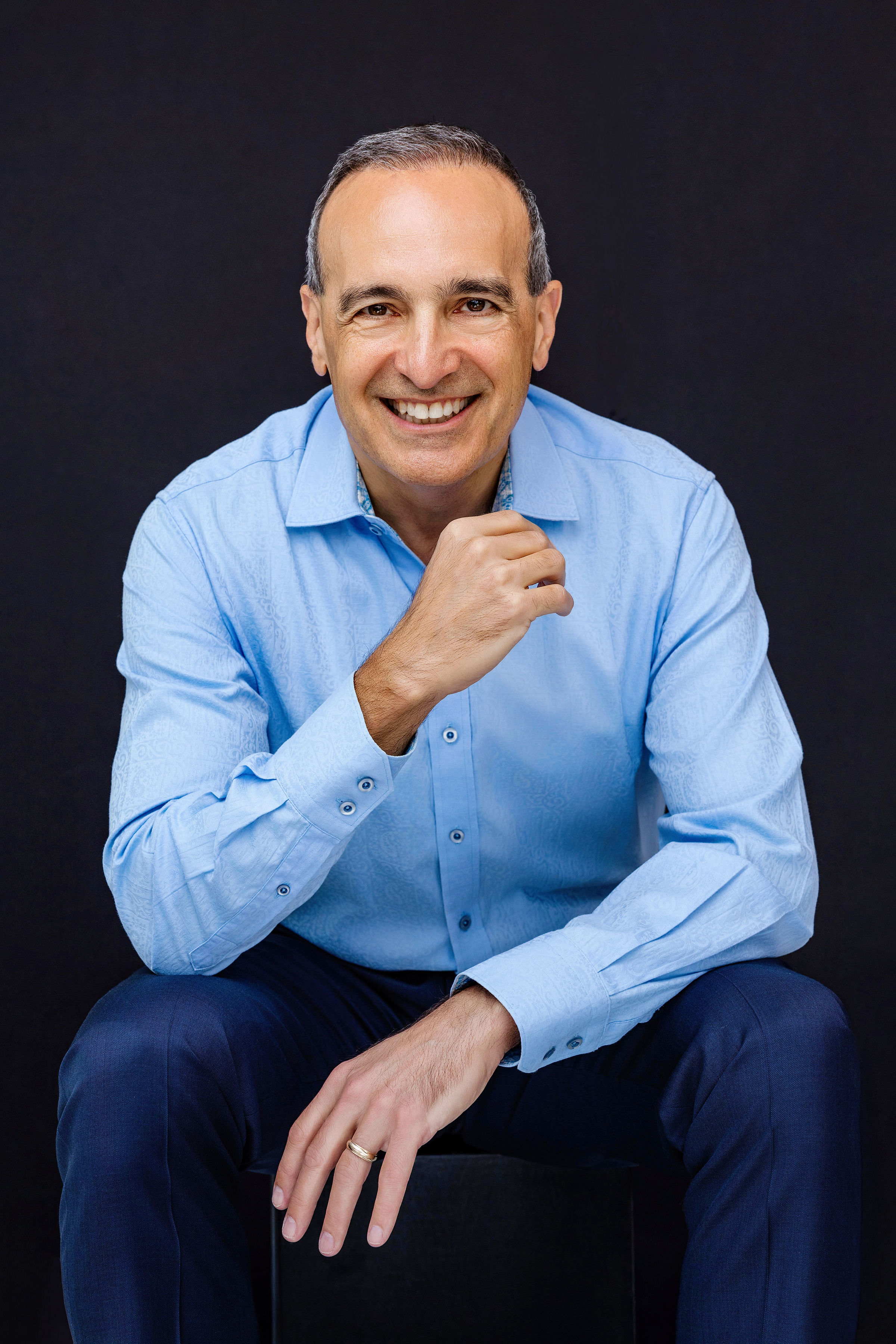
Richard is the author of The Wandering Worshipper, The Reluctant Churchgoer’s Journey to Belonging. He also writes 52 Steps Forward, a weekly blog for those who prefer to think rather than be told.
Richard is a curious observer. His open-minded and hearted approach to people and life richly rewards him with profound personal experiences and associations.
Outside his writing, Richard supports the consumer-packaged goods ecosystem through investment, mentorship, and leadership in an industry association. He also serves and supports several philanthropic organizations. Beforehand, he owned and operated his family’s food processing business for 25 years. He is also an attorney and CPA.